Read this page in: Español Italiano Français Deutsch NederlandsTranslations open from the original English page. To choose another language, return here and select it from the list.

Classic Poets: Le Fanu and Longfellow
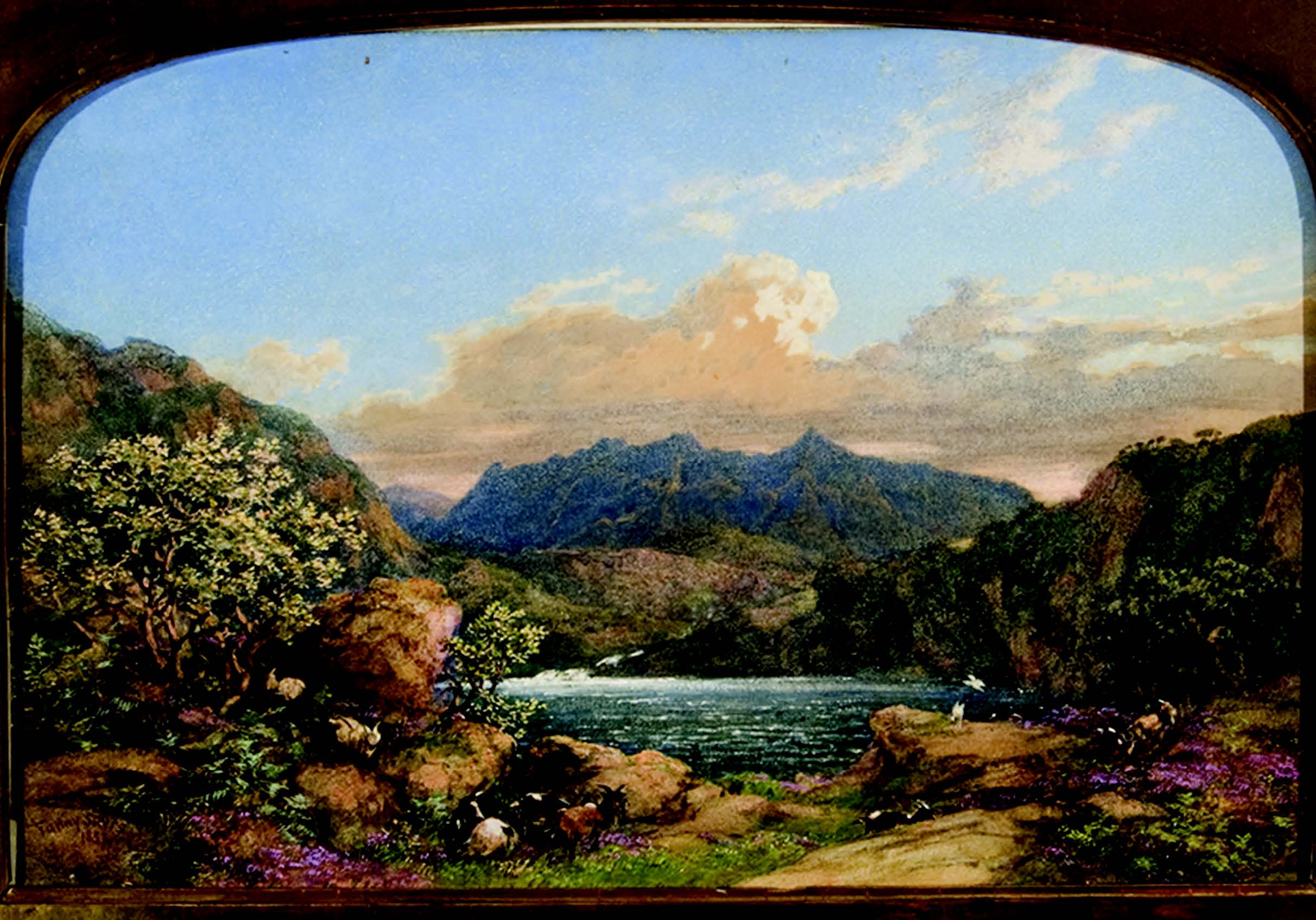
The Reeks, Killarney, Ireland by Fanny Steers

Location: Longfellow House Washington's Headquarters National Historic Site (U.S. National Park Service)

Painting: The Reeks, Killarney, Ireland by Fanny Steers

Two voices use memory and rain as metaphor.

In Le Fanu’s ‘Memory’, a bugle call crosses Killarney and is gone, yet its echoes remain. The mind does much the same: it keeps the sound after the voice has fallen silent, carrying the emotion down into the subconscious, where it may sit quietly for years, waiting to be rediscovered and reignited. Grief, folly, hope and joy survive there, long beyond the moment that first awakened them. And in this issue we search for that same balance/discord: between the old and the new, between life and death, between what survives and what disappears; between the words that find their way back to us and those that fall between two stools, never to be resurrected again.

Longfellow’s ‘The Rainy Day’ begins outside — rain against the world, wind worrying the vine, dead leaves falling from a mouldering wall — and then he turns his pen inward. Memory becomes a landscape that clings. This time, to the past itself. Yet even on the darkest days, something remains beyond the weather. Behind the cloud, the sun is still shining.

Longfellow knew profound grief in his own life, so the hope here does not feel like optimism imposed from outside; it feels more like the small persistent light a person finds through a picture, a piece of music, a memory, one they can keep returning to: small checkpoints that lift the soul.
Together, the poems make a quiet music of echo and rain, loss and endurance. One listens for what remains; the other waits for what will return.


MEMORY by Joseph Sheridan Le Fanu (1814-1873)

ONE wild and simple bugle sound,
Breathed o'er Killarney's magic shore,
Awakes sweet floating echoes round
When that which made them is no more.

So slumber in the human breast
Wild echoes that will sweetly thrill
Through memory's vistas when the voice
That waked them first for aye is still.

Oh! memory, though thy records tell
Full many a tale of grief and folly,
Of mad excess, of hope decayed,
Of dark and cheerless melancholy.

Yet, memory, to me thou art
The dearest of the gifts of mind,
For all the joys that touch my heart
Are joys that I have left behind.


THE RAINY DAY by Henry Wadsworth Longfellow

The day is cold, and dark, and dreary;
It rains, and the wind is never weary;
The vine still clings to the mouldering wall,
But at every gust the dead leaves fall,
And the day is dark and dreary.

My life is cold, and dark, and dreary;
It rains, and the wind is never weary;
My thoughts still cling to the mouldering Past,
But the hopes of youth fall thick in the blast,
And the days are dark and dreary.

Be still, sad heart! and cease repining;
Behind the clouds is the sun still shining;
Thy fate is the common fate of all,
Into each life some rain must fall,
Some days must be dark and dreary.


All Rights Reserved--2007-2025